

Mercedes Diesel Tuning Done Right

A Mercedes diesel that feels flat off the line usually is not short on potential. In many cases, it is short on calibration. That is why mercedes diesel tuning attracts owners who want more than a louder exhaust note or a generic power claim. The real objective is better torque delivery, cleaner drivability, smarter transmission behavior, and gains you can actually validate.
Mercedes diesel platforms respond well to software changes because the factory calibration is built around broad market conditions, emissions targets, fuel quality variation, and long service life. Those are reasonable priorities for a global manufacturer. They are not the same priorities as an owner who wants stronger mid-range pull, quicker throttle response, or a transmission strategy that better matches the engine’s new torque curve.
What mercedes diesel tuning actually changes
On a modern Mercedes diesel, tuning is not a single number change. It is a coordinated recalibration of multiple torque and airflow models inside the ECU, often paired with transmission software work when the application calls for it. A proper file adjusts boost targets, injection timing, rail pressure strategy, torque limiters, throttle mapping, smoke control, and load-based protections. The goal is not simply to request more fuel. The goal is to shape how the engine makes power across the usable range.
That distinction matters. A diesel that spikes torque early and falls off hard may look impressive in conversation, but it often feels less refined on the road. A well-calibrated Mercedes diesel should build torque smoothly, hold it where the vehicle spends most of its time, and remain predictable under part throttle as well as full load.
Transmission behavior is part of that experience. Many Mercedes diesel owners focus on engine output first, then realize the vehicle still upshifts too early, lugs in the wrong gear, or hesitates on kickdown. On torque-heavy applications, transmission calibration can be the difference between a tune that feels unfinished and one that feels factory engineered.
Why Mercedes diesel platforms reward custom calibration
Mercedes diesel engines are generally strong candidates for tuning because they are torque-oriented from the start and often leave margin on the table. Models using the OM642, OM651, and other Mercedes diesel families can show substantial improvement with software alone, especially in the low and mid-range where daily drivability lives.
But this is also where generic files get exposed. A one-size-fits-all tune may produce a noticeable change, yet that does not mean it is the right calibration for your vehicle. Mileage, injector condition, turbocharger health, emissions system status, intake restrictions, transmission adaptation, and even regional fuel quality all affect how a diesel responds.
A platform-specific tuner looks at the full picture. If boost control is slightly inconsistent or rail pressure behavior is marginal, the calibration needs to account for that rather than ignore it. On a premium vehicle, especially one with high mileage or prior repair history, tuning should follow diagnostics, not replace them.
The gains that matter most
Horsepower numbers get attention, but diesel owners usually notice torque and drivability first. The most satisfying Mercedes diesel tune is the one that removes laziness from the pedal, improves response during rolling acceleration, and gives the engine a more confident feel under load.
For many street-driven vehicles, the biggest improvement is in the middle of the rev range. That is where passing power happens, where SUVs and heavier sedans feel less burdened, and where towing or highway merging becomes easier. A good calibration also reduces the disconnected feeling some factory files have between pedal input and actual acceleration.
Efficiency can improve too, but only under the right conditions. If the tune increases torque efficiency and the driver does not use the extra power constantly, fuel economy may hold steady or improve slightly. If the vehicle is driven harder because it feels better, any efficiency gain can disappear quickly. That is the honest answer - it depends on how the vehicle is used.
Mercedes diesel tuning and supporting hardware
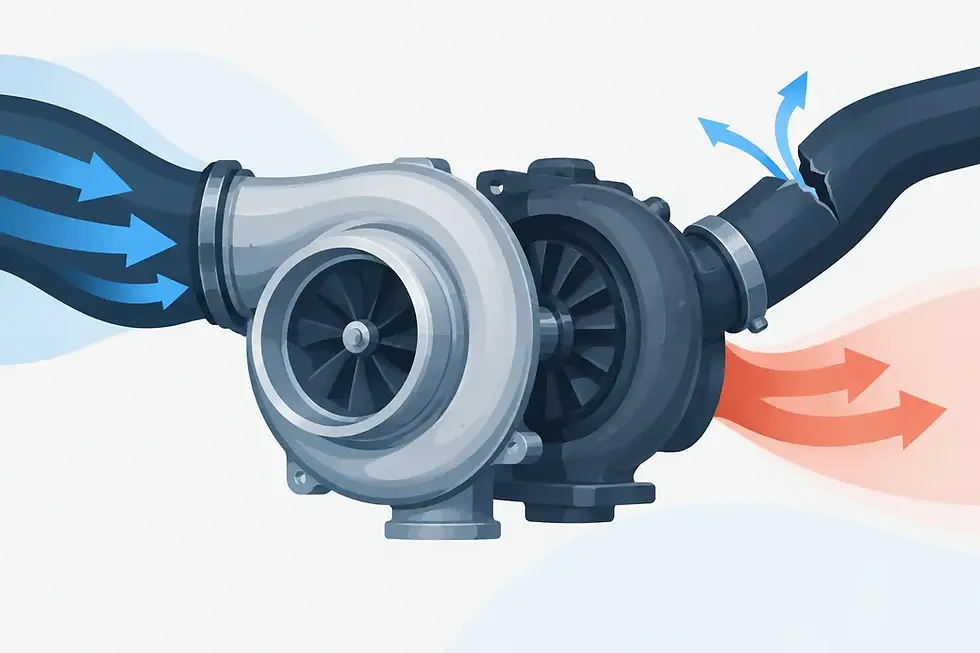
Not every vehicle needs hardware upgrades. Many Mercedes diesel applications respond very well to software on a stock setup. That said, hardware condition is critical. A tired intercooler hose, sticky swirl flap issue, underperforming MAF, boost leak, or weak transmission can turn a good tune into a poor outcome.
This is why pre-tuning inspection matters more on diesel platforms than many owners expect. Diesels can hide problems well. They may still start, idle, and cruise normally while power delivery is already compromised. Adding calibration demand to a vehicle with unresolved faults often makes those problems more obvious, not less.
If the goal goes beyond a moderate street tune, hardware planning becomes more important. Turbo upgrades, charge-air improvements, intake changes, and exhaust modifications can support higher output, but each one shifts the calibration strategy. More airflow potential does not automatically create better performance unless the ECU and transmission logic are matched to it.
The dyno matters, but so does the road
Dyno validation is valuable because it gives tuning work a measurable baseline and a measurable result. You can see whether torque came in where expected, whether power carries cleanly, and whether changes actually improved the curve rather than just moved it around.
For Mercedes diesel tuning, dyno work also helps spot issues that casual test drives miss. If power falls off sharply, boost control oscillates, or the air-fuel relationship is not where it should be, the graph usually tells the truth faster than seat-of-the-pants impressions do.
Still, dyno numbers are only part of the job. Road data matters because this is where transmission behavior, part-throttle modulation, tip-in response, and thermal behavior show up in real conditions. A diesel can produce a respectable dyno sheet and still need refinement in traffic, during highway roll-on, or under sustained uphill load.
That is why data-driven calibration is the standard on serious European platforms. The file should be built and revised around actual vehicle behavior, not just advertised output.
Common mistakes in mercedes diesel tuning
The most common mistake is chasing peak numbers while ignoring how the car is actually driven. A heavy Mercedes SUV, for example, benefits more from a broad and controlled torque curve than from a dramatic top-end figure it rarely uses.
The second mistake is skipping transmission software consideration. When engine torque rises substantially, the stock TCU strategy may not deliver the best shift timing, clutch pressure control, or gear selection. That can make the vehicle feel slower than it is or create unnecessary drivability issues.
The third mistake is tuning around existing faults. If the vehicle has DTCs, inconsistent sensor data, limp-mode history, emissions-related faults, or adaptation issues, those need to be addressed first. Software should refine a healthy platform, not mask a weak one.
What owners should expect from a specialist
A specialist should be able to explain what the calibration is changing and why. That includes expected power delivery, how the transmission may behave after tuning, whether supporting maintenance is recommended, and what limitations remain on a stock vehicle.
You should also expect platform knowledge. Mercedes diesel tuning is not interchangeable with other diesel tuning. The control strategies, torque structure, gearbox interaction, and known failure points differ by generation and engine family. A tuner who works deeply in these systems will calibrate more precisely and diagnose faster when something is not right.
That combination of software capability, diagnostics, and dyno-backed validation is what separates a real tuning process from a file upload. At ECUPROGRAM, that approach is especially relevant for Mercedes diesel owners who want measurable performance gains without sacrificing refinement.
Is it worth tuning your Mercedes diesel?
If you value stronger mid-range torque, improved response, and a vehicle that feels more composed under acceleration, usually yes. If the car already has unresolved mechanical or electronic issues, the right move is to diagnose first and tune second.
The best Mercedes diesel builds are not the loudest or the most aggressively advertised. They are the ones that feel integrated - cleaner power delivery, better shifting, and performance that holds up not just for one pull, but every day you drive it.
Choose the calibration strategy that matches the vehicle, the hardware, and the way you actually use it. That is where diesel tuning stops being a gimmick and starts feeling like engineering.


Comments