

Mercedes OM642 Delete Review: Risks and Results
- Miguel Acha
- Aug 10
- 5 min read

A Mercedes OM642 can feel exceptionally strong when its air, fuel, boost, and transmission strategies are working together. It can also become frustrating when repeated emissions-system faults force limp mode, reduce torque, or turn a capable diesel into a constant diagnostic project. This Mercedes OM642 delete review looks at the claimed benefits, the engineering trade-offs, and the legal realities owners should consider before treating deletion as a solution.
What “delete” means on an OM642
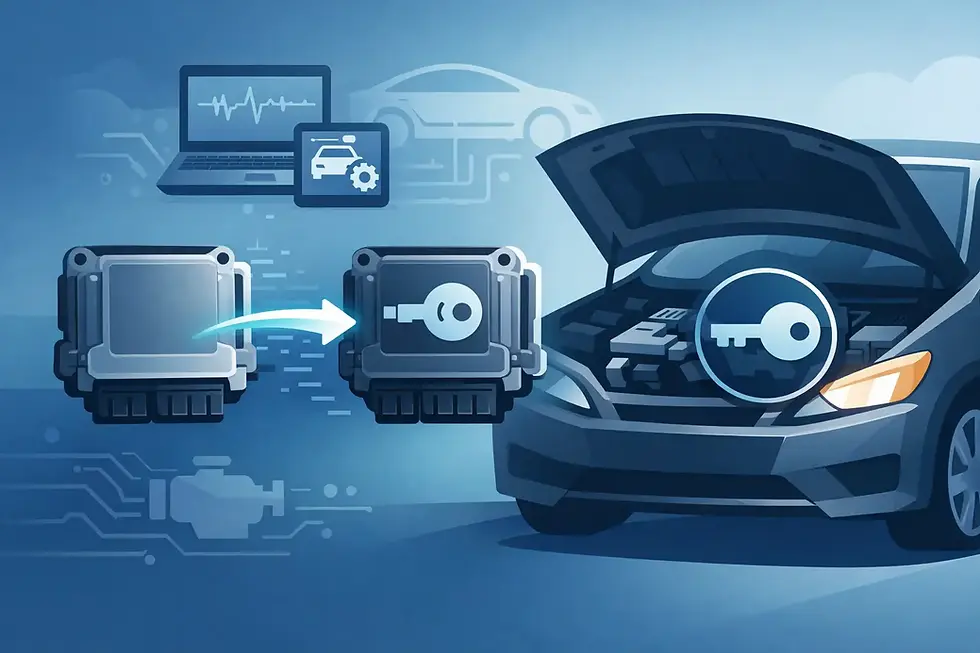
The OM642 is Mercedes-Benz's 3.0-liter V6 diesel, used across a wide range of SUVs, sedans, and vans. Depending on model year and market, it may use exhaust gas recirculation (EGR), a diesel particulate filter (DPF), selective catalytic reduction (SCR), diesel exhaust fluid, and related temperature, pressure, and NOx sensors. The word “delete” is often used broadly, but it can refer to disabling or removing one system, several systems, or the fault monitoring associated with them.
That distinction matters. A vehicle with an EGR-related fault is not necessarily experiencing a DPF problem. A DEF warning can originate with a tank heater, pump, injector, dosing control module, wiring issue, or sensor plausibility fault. Treating every warning light as justification for a delete overlooks the diagnostic work needed to identify the actual failure.
For road-driven vehicles, emissions-control tampering is prohibited under federal law and can also violate state requirements. A legitimate review of OM642 options must begin there: emissions-system modifications are not an appropriate road-use repair strategy. Owners should verify applicable law and prioritize compliant diagnosis and repair.
Why OM642 owners consider it
The appeal is understandable. The OM642 produces substantial low-end torque and responds well to careful ECU calibration. When an emissions component malfunctions, however, the driver may experience reduced power, frequent regeneration behavior, poor fuel economy, restricted operation, warning messages, or a no-start countdown on certain SCR-equipped vehicles.
Many owners have already replaced components before seeking software work. That history creates skepticism, especially when a dealer-level repair estimate includes several expensive parts without a clear root-cause explanation. The temptation is to eliminate the system creating the warning rather than correct it.
But fault recurrence does not automatically mean the emissions hardware itself is the entire problem. Intake leaks, boost-control faults, failed sensors, poor electrical connections, exhaust leaks, thermostat issues that prevent proper operating temperature, and deferred maintenance can all affect how the diesel aftertreatment system behaves. On this platform, a precise diagnostic process is often more valuable than a broad parts replacement plan.
Expected results versus real-world results
Owners commonly associate an OM642 delete with stronger acceleration, sharper response, and fewer emissions-related warnings. In a controlled off-road or motorsport-only application where permitted, reducing certain emissions strategies can change exhaust backpressure and alter how the engine delivers torque. The degree of change depends heavily on the vehicle's hardware condition, turbocharger health, intake tract, charge-air cooling, fuel quality, and calibration strategy.
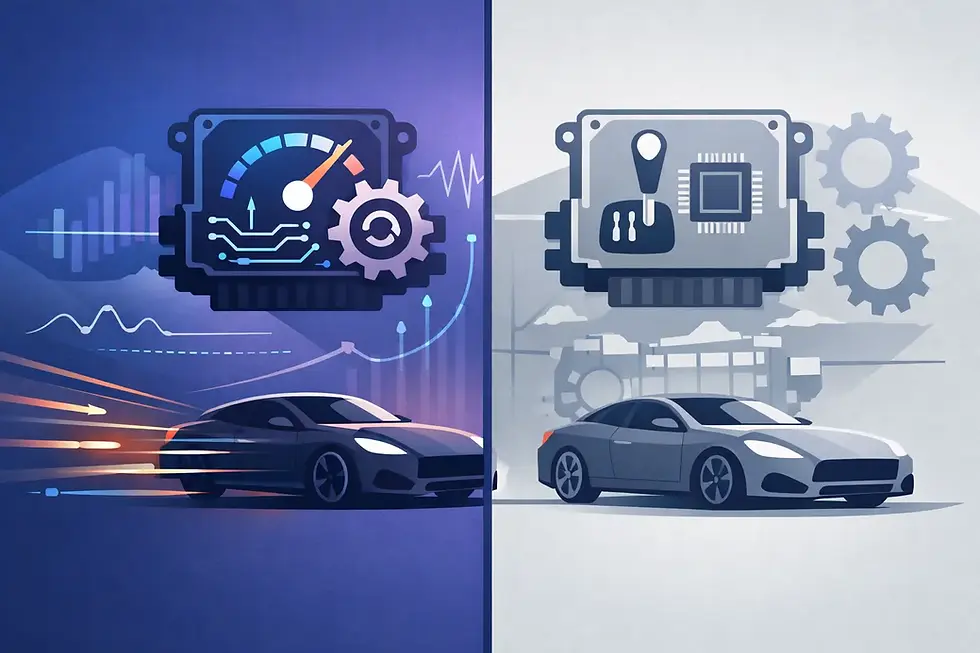
The real-world performance result is rarely as simple as a single modification. A healthy OM642 with a conservative, data-driven performance calibration can often feel more responsive because torque delivery, boost control, fueling, and transmission behavior have been evaluated as a system. A vehicle with unresolved mechanical faults will not become dependable because warning logic has been altered.
There is also a difference between peak dyno output and usable drivability. Excess torque too early in the rev range can create harsh shifts, traction limitations, higher cylinder pressure, and unnecessary stress on the transmission and driveline. The better calibration is not always the most aggressive file. It is the one that delivers repeatable performance within sensible thermal and mechanical limits.
Reliability is the central trade-off
The OM642 has several well-known service considerations beyond the aftertreatment system. Oil cooler seal leaks, intake swirl flap and actuator faults, charge-air leaks, turbo actuator concerns, carbon accumulation, and injector-related issues can all shape ownership experience. A review that credits or blames one modification for every later issue is not particularly useful.
Calibration quality becomes especially important on a high-mileage diesel. Poorly developed software may mask diagnostic evidence, create unrealistic sensor expectations, use abrupt torque modeling, or overlook the communication between the engine control unit and transmission control module. The result can be a vehicle that feels quick for a short test drive but shifts poorly, runs hotter under load, or develops intermittent faults that are harder to diagnose later.
Professional work begins with the vehicle's condition. Stored and pending diagnostic trouble codes, live data, boost targets versus actual boost, fuel rail behavior, exhaust temperatures where applicable, battery voltage, and transmission operation should be assessed before any calibration decision. The goal is not simply to remove an annoyance. It is to establish whether the platform is mechanically ready for the intended use.
Legal and inspection considerations
For U.S. road use, removing or defeating emissions equipment carries significant consequences. Federal anti-tampering rules apply regardless of whether a local inspection program is strict, absent, or based only on an OBD readiness check. State regulations, registration requirements, resale disclosures, warranty implications, and commercial fleet compliance can add further exposure.
There is also a practical ownership issue. An altered vehicle may be difficult to sell to an informed buyer, challenging to service at a dealership or independent shop, and more complicated to return to a compliant configuration. Software modifications that suppress faults without preserving clear service records can reduce confidence in the vehicle's history.
If the vehicle is used exclusively in a lawful off-road, closed-course, or competition context, the owner still needs to understand the rules governing that use. “Off-road only” is not a label that automatically makes every modification permissible. The responsible approach is to confirm the intended application before making irreversible hardware or software decisions.
How to evaluate an OM642 service provider
An OM642 specialist should be able to explain what is being diagnosed, what data supports the recommendation, and what the expected result is. Broad promises of more power, no lights, and better fuel economy without a health check are a warning sign on any premium diesel platform.
Ask whether the calibration is vehicle-specific, whether baseline faults are addressed first, and how engine torque management is coordinated with transmission behavior. For performance-oriented work, dyno validation and controlled logging are valuable because they reveal whether requested boost, measured boost, fueling, temperatures, and torque delivery agree under load. A generic file may produce a noticeable change, but it does not offer the same confidence as a measured calibration process.
It is equally reasonable to ask what a provider will not do. A technically disciplined shop should be clear about legal boundaries, should not present emissions tampering as a universal repair, and should distinguish between compliant repairs, performance calibration, diagnostics, and track-only applications where allowed.
ECUPROGRAM approaches European diesel work from that diagnostic-first position, using platform-specific ECU knowledge and measured calibration rather than treating a complex OM642 fault as a one-size-fits-all software request.
A better decision framework for OM642 owners
Before pursuing any modification, establish the vehicle's baseline. Confirm the exact fault codes, identify whether they are current or historical, inspect the supporting live data, and correct mechanical or electrical problems that would compromise performance or reliability. If an emissions component has failed, compare a compliant repair with the total cost and long-term consequences of other paths.
If the objective is stronger towing response, improved passing power, or more controlled transmission behavior, discuss a conservative performance calibration that respects the vehicle's condition and legal configuration. A well-maintained OM642 is a far better candidate for precision tuning than one carrying unresolved boost, cooling, intake, or aftertreatment faults.
The most valuable outcome is not a dashboard with fewer messages. It is an OM642 that delivers predictable torque, clean diagnostics, and dependable operation for the way the vehicle is actually used.

Comments