
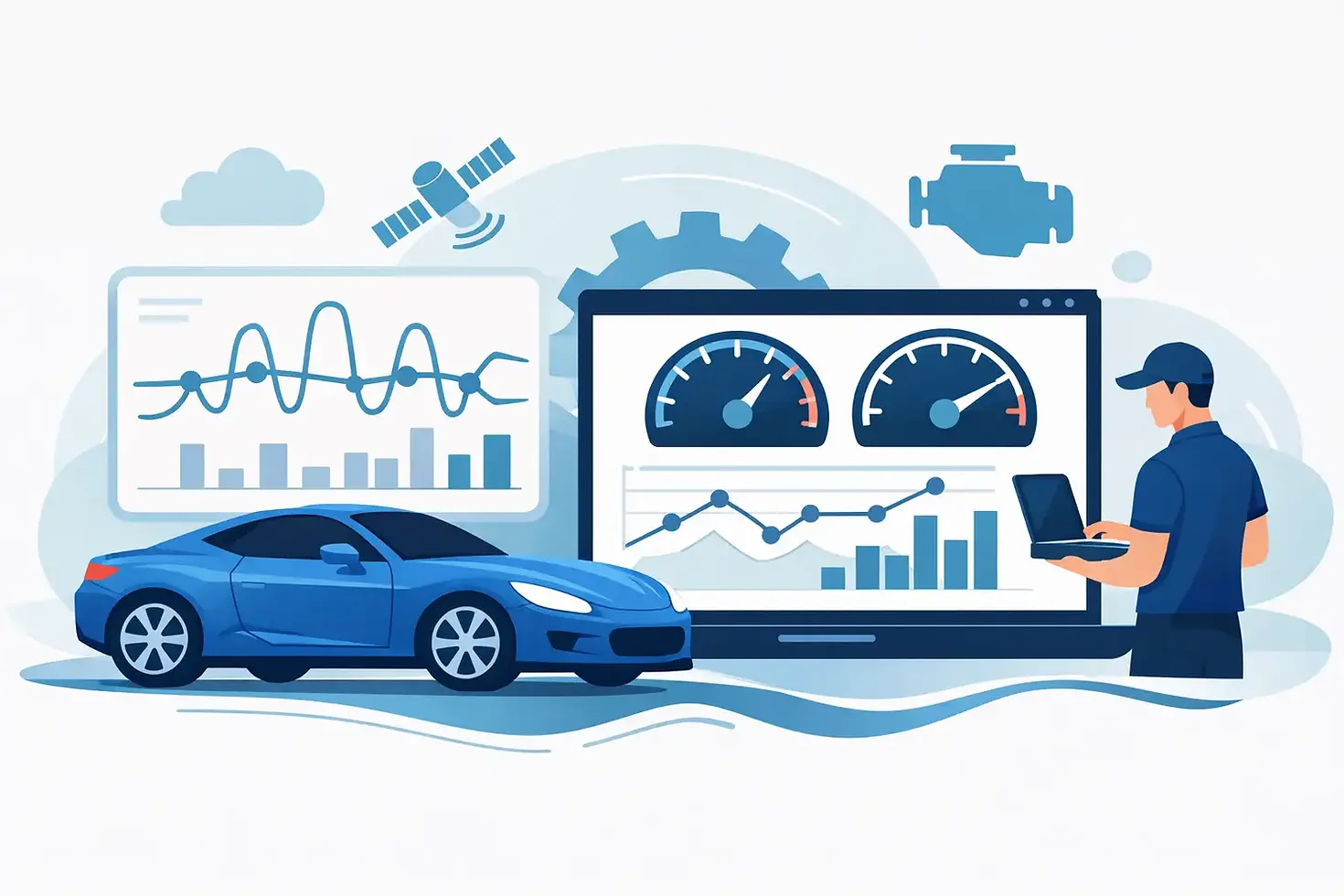
Vehicle Data Logging Tune Explained

A fast dyno number can look impressive, but it does not tell you how a car behaves pulling through third gear on the road, recovering from a heat-soaked stoplight, or managing load on a long highway climb. That is where a vehicle data logging tune separates a custom calibration from a generic file. Logging shows what the ECU, transmission, sensors, and supporting systems are actually doing under real operating conditions, and that is what allows a tuner to refine power delivery, drivability, and safety with precision.
For European, diesel, and exotic platforms, this matters even more. Modern Mercedes-Benz, VW/Audi, Porsche, BMW, AMG, and high-end performance vehicles rely on dense layers of torque modeling, boost control, fuel strategy, thermal management, and transmission logic. If calibration changes are not validated with real data, small errors can turn into inconsistent performance, poor throttle response, excessive exhaust gas temperatures, clutch stress, or limp-mode faults. Good tuning is not just about adding output. It is about proving the calibration behaves correctly everywhere the vehicle is actually used.
What a vehicle data logging tune really means
A vehicle data logging tune is a calibration process that uses recorded operating data from the vehicle to adjust and verify the ECU software. Instead of relying only on a base map or dyno pull, the tuner reviews specific channels such as boost pressure, rail pressure, ignition timing, air mass, lambda, intake air temperature, torque intervention, gear-dependent load, and transmission behavior. Those values reveal whether the requested targets in the file match what the engine and control systems are delivering.
That distinction is critical. A tune can request more boost or more fuel, but if the turbo control system cannot hit target cleanly, or if the transmission starts closing torque in response, the result is not a properly calibrated car. It may feel quick in one scenario and inconsistent in another. Data logging gives the tuner visibility into the difference between commanded behavior and actual behavior.
On diesel platforms, logging is especially valuable because the relationship between boost, fuel quantity, rail pressure, smoke control, EGT management, and torque limits is tightly connected. On turbo gasoline platforms, timing correction, knock activity, fuel trims, wastegate control, and charge temperatures can determine whether a file is genuinely optimized or simply aggressive on paper.
Why dyno tuning alone is not enough
A dyno is an essential tool, but it is not the whole process. It gives repeatable load, allows measured horsepower and torque validation, and helps identify gains in a controlled environment. What it does not fully reproduce is the complete range of road behavior a premium vehicle sees every day.
A dual-clutch Audi or Porsche may shift differently on the road than it does on the rollers. A Mercedes diesel may manage boost and torque in a way that changes under sustained load and rising temperatures. A high-output exotic may respond differently once intake temperature climbs and the cooling system settles into a real traffic pattern. These are not minor details. They directly affect how the car feels and how safe the calibration remains after repeated use.
The strongest tuning process combines dyno validation with logged road data. Dyno testing confirms measurable output. Logging confirms the vehicle is achieving that output correctly, consistently, and without control-system conflict.
The data channels that matter most
The exact logging list depends on the platform, ECU family, and modifications, but the principle stays the same: measure what controls performance and what protects the engine.
Boost and air control
On turbocharged vehicles, requested boost versus actual boost is one of the first areas to review. A mismatch may point to tuning error, hardware limitation, a diverter issue, vacuum leakage, wastegate control instability, or charge system leaks. Air mass readings also help confirm whether the engine is ingesting the expected airflow for the requested load.
Fuel delivery and combustion
Gasoline engines need close attention to lambda, fuel trims, high-pressure fuel system performance, injector behavior, and ignition correction. Diesel engines require review of rail pressure, injection quantity, smoke limitation, and EGT-related strategy. If fuel delivery does not support the calibration, the tune must be adjusted before power claims mean anything.
Torque modeling and transmission response
Many modern European vehicles are torque-based. That means the ECU, TCU, traction system, and stability controls all communicate around calculated torque values. If the tune makes changes without preserving proper torque structure, the vehicle may shift poorly, reduce requested load, or behave unpredictably between gears. Logging torque intervention, throttle closure, load request, and shift behavior reveals whether engine and transmission software are working together.
Temperature and protection strategy
Heat changes everything. Intake air temperature, coolant temperature, oil temperature, and component protection routines all affect how a tuned vehicle performs over time. A file that looks clean on a cold pull may behave very differently after several hard accelerations. Logging shows whether the calibration remains stable once thermal load increases.
Where generic tunes usually fall short
Off-the-shelf files often assume a vehicle is mechanically healthy, operating in ideal conditions, and equipped with identical hardware to every other car on that platform. In practice, that is rarely true. Two similar vehicles can show different fuel system health, turbo response, sensor behavior, adaptation values, and transmission condition.
This is one reason premium and exotic platforms benefit from a data-driven process. A Bentley, AMG, or Porsche owner is not simply looking for a number. They want the vehicle to start, idle, cruise, shift, and pull correctly. They expect factory-like refinement with stronger performance. That requires calibration work based on what the specific vehicle reports, not what a template assumes.
A vehicle data logging tune also helps expose issues that are not strictly tuning-related. Weak coils, underperforming fuel pumps, boost leaks, tired sensors, transmission adaptation problems, and thermal management faults often show up in logs before they become obvious to the driver. That protects the car and prevents misdiagnosing a mechanical problem as a tuning issue.
Why platform expertise matters
Data by itself is not enough. The value comes from interpreting it correctly.
A tuner working daily with Mercedes diesel ECUs will understand when rail pressure behavior is normal for that control strategy and when it signals a limitation that needs calibration revision. A VW/Audi specialist will know how torque monitoring, smoke maps, boost control, and DSG behavior interact under modified conditions. On Porsche and other exotic platforms, the same principle applies: the calibration has to respect how the factory control architecture manages power, protection, and drivability.
That is where specialist work matters. Reading a log is not just spotting a high or low number. It is understanding which values matter on that ECU family, which protections are active, which interventions are expected, and which indicate risk or lost performance.
What owners should expect from the process
A proper logging-based calibration process is iterative. The vehicle is tested, data is reviewed, revisions are made, and the results are verified again. Sometimes the first file is close. Sometimes the data reveals that the car needs mechanical correction before further tuning makes sense. That is not a setback. It is the responsible way to tune a valuable vehicle.
Owners should also expect trade-offs to be discussed honestly. More aggressive boost or torque targets may create stronger peak numbers, but they can also increase heat, reduce consistency, or place more strain on the transmission and driveline. In some cases, the best calibration is not the most aggressive one. It is the one that delivers repeatable performance with clean drivability and appropriate safety margin.
For daily-driven European vehicles, that often means sharpening response, improving midrange torque, and smoothing transmission behavior rather than chasing the highest possible dyno figure. For diesel applications, it may mean stronger usable torque and better efficiency while maintaining control of smoke, temperature, and hardware load. For exotics, it usually means preserving refinement and system integrity while extracting measurable gains.
At ECUPROGRAM, that data-first mindset is what separates precision ECU calibration from file loading. The goal is not simply more power. The goal is verified performance that respects the platform.
When logging becomes non-negotiable
The more complex the vehicle and the more valuable the hardware, the less room there is for guesswork. Logging is essential when a vehicle has upgraded turbos, fueling changes, delete work, transmission tuning, intermittent faults, or drivability complaints that only appear under certain conditions. It is also essential when the owner wants confidence that the tune is not just fast once, but correct over time.
If you own a modern European performance car or diesel platform, the right question is not whether a tune can make more power. Most can. The real question is whether the calibration has been validated against the vehicle's actual behavior. That is what determines whether the result feels engineered or improvised.
The best tuned vehicles are rarely the ones with the loudest claims. They are the ones that pull cleanly, shift properly, stay consistent when hot, and deliver their gains without arguing with the factory control systems.


Comments