

How to Improve Diesel Throttle Response Safely

A modern diesel can make substantial torque yet still feel hesitant when you first ask for it. On a Mercedes CDI, VW/Audi TDI, or performance diesel SUV, that delay is rarely caused by one part alone. Knowing how to improve diesel throttle response starts with identifying whether the issue is calibration, airflow control, fuel delivery, transmission behavior, or a fault the ECU is actively managing.
The right goal is not simply to make the pedal feel more sensitive. A quality result delivers earlier, cleaner torque with predictable behavior, controlled exhaust temperatures, and drivetrain operation that remains within sensible limits. That requires platform-specific diagnostics and calibration, not a generic tune loaded without testing.
What Creates Diesel Throttle Lag?
Diesel throttle response is different from gasoline throttle response. Most diesels do not use a conventional throttle plate to directly control engine power. When the driver requests acceleration, the ECU calculates torque demand, then coordinates injected fuel quantity, boost pressure, turbo vane position or wastegate control, EGR operation, rail pressure, intake airflow, and torque limits in the engine and transmission control units.
A delay can occur anywhere in that chain. Variable-geometry turbos need time to move into the correct vane position. Larger turbochargers need more exhaust energy before they generate useful boost. The ECU may limit fuel at low rpm to control smoke, protect the turbocharger, reduce cylinder pressure, or stay within transmission torque targets. Automatic transmissions can also soften initial torque while they decide whether to downshift or apply a clutch.
This is why a pedal sensitivity device can make a diesel feel quicker without producing more power. It changes the relationship between pedal travel and requested torque. That may suit some drivers, but it does not correct slow boost buildup, restricted airflow, a weak actuator, conservative torque modeling, or a transmission calibration that is holding the engine in the wrong gear.
Diagnose Before You Calibrate
Before modifying software, establish whether the vehicle is mechanically healthy. Premium diesel platforms are heavily monitored, and a vehicle can lose response without displaying an obvious warning light. A stored fault, implausible sensor value, or adaptation at its limit may be enough for the ECU to reduce requested torque.
A proper diagnostic process reviews fault memory, live data, and requested-versus-actual values under load. Useful channels include boost pressure, mass airflow, intake air temperature, rail pressure, turbo actuator position, EGR command, exhaust temperature where available, and transmission torque intervention. The point is to identify the reason for the lag, rather than treating the symptom.
On Mercedes diesel applications, for example, an intake leak, charge-air hose issue, sticking turbo actuator, or contaminated airflow sensor can create a response problem that no calibration should be asked to hide. VW and Audi TDI platforms may show similar symptoms when vane control, vacuum supply, charge-air plumbing, or intake deposits are affecting airflow. The best tune in the world cannot compensate for a control system that is not delivering what it is commanded to deliver.
Check the Air Path First
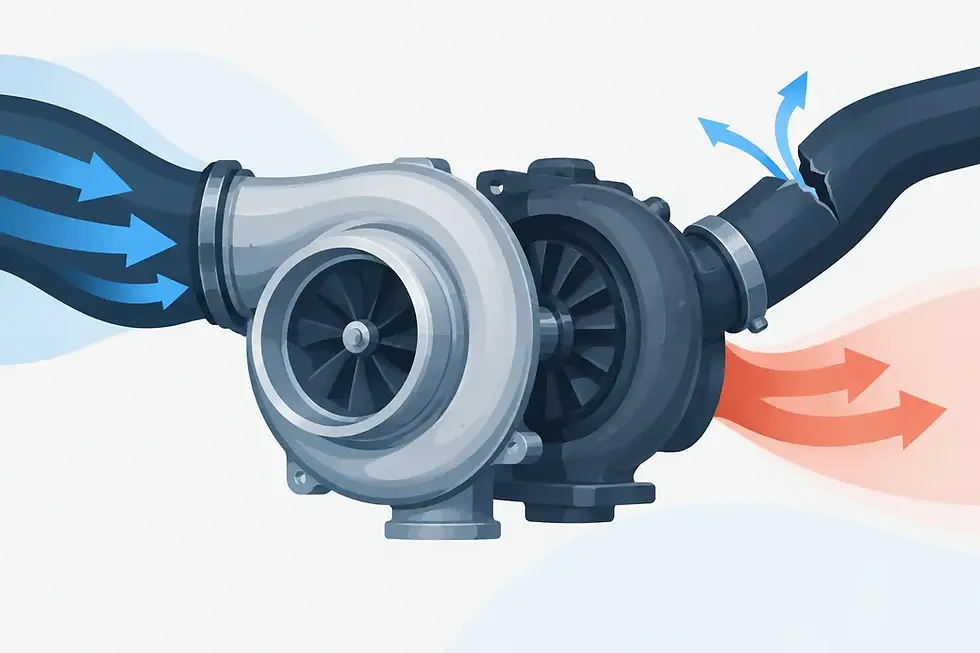
Diesel engines respond strongly to airflow quality because fuel delivery and boost control are tightly linked. Inspect the air filter and intake tract, then pressure-test the charge-air system if logs suggest boost is not meeting target. Small leaks can become more apparent at low and midrange load, where the driver feels them as a lazy initial pull.
Intake manifold deposits, EGR-related contamination, and restricted swirl-flap operation can also affect low-rpm airflow on certain engines. These concerns should be evaluated as mechanical service items. Emissions systems must remain compliant with applicable federal, state, and local laws; removing or disabling them for road use is not an appropriate throttle-response solution.
Verify Fueling and Sensor Data
Fuel pressure that trails its target can limit torque before the driver recognizes it as a fuel-system problem. The same is true of a biased manifold pressure sensor, mass airflow sensor, or temperature sensor. Modern ECUs make fast calculations from these inputs. If the input is wrong, torque delivery will be wrong.
Data logging under controlled load is more useful than judging response from a quick no-load rev in a parking lot. The vehicle should be evaluated through the rpm range and in the gears where the concern actually occurs. A diesel that feels slow at 1,500 rpm in a tall gear may be behaving normally, while one that underperforms at 2,200 rpm at full load likely needs closer attention.
How to Improve Diesel Throttle Response With ECU Calibration
Once the vehicle is healthy, precision ECU calibration is the most effective way to improve diesel throttle response without relying on superficial pedal tricks. The calibration can refine how quickly the ECU translates pedal demand into requested torque, while coordinating fueling, boost targets, turbo control, rail pressure, smoke limitation, and thermal protection.
The best results come from reshaping the torque curve, not simply adding peak horsepower. On a street-driven diesel, the useful gain is often stronger torque in the low-to-midrange where the vehicle spends most of its time. Careful boost and fueling control can reduce the dead zone before the turbo becomes fully effective, making merging, passing, and part-throttle driving more immediate.
However, more aggressive low-rpm torque is not always better. Excessive cylinder pressure, turbine speed, exhaust temperature, or transmission load can shorten component life. A responsible calibration respects the turbocharger’s operating range, fuel-system capacity, engine condition, and gearbox limits. It should retain appropriate safety strategies rather than overriding them indiscriminately.
Custom calibration is especially valuable on vehicles with hardware changes, higher mileage, unusual operating conditions, or prior software modifications. An off-the-shelf file may offer a noticeable change, but it cannot account for every vehicle’s actual boost behavior, fuel quality, adaptation values, and transmission strategy. Data-driven calibration provides a more controlled path to real performance gains.
Transmission Software Can Matter as Much as Engine Power
Owners often focus on the engine ECU and overlook the transmission control unit. Yet on torque-managed European diesels, the transmission may be the largest contributor to a delayed or muted response.
A transmission calibration can improve the relationship between accelerator input, downshift timing, clutch pressure, torque intervention, and gear holding. If the gearbox waits too long to downshift, even a strong engine will feel unresponsive. If it requests too much torque reduction during shifts, acceleration can feel interrupted rather than decisive.
The right approach depends on the vehicle and its use. A luxury diesel sedan may benefit from quicker but still refined kickdown behavior and cleaner part-throttle shifts. A tuned TDI or high-torque AMG diesel application may need revised torque limits and shift strategy to work properly with the engine calibration. The target is coordinated behavior, not harshness for its own sake.
Hardware Upgrades: Useful Only When the Data Supports Them
Hardware can improve response, but only when it addresses a confirmed bottleneck. A less restrictive intake may reduce pressure drop slightly, but it will not transform a diesel with a boost-control fault. A larger intercooler can improve consistency during repeated pulls and high ambient temperatures, although its added volume can marginally affect transient response if the rest of the system is not matched correctly.
Turbocharger upgrades are a larger decision. A bigger turbo may produce excellent top-end power while requiring more rpm to build boost. For a vehicle used primarily on the street, a properly sized turbo with efficient turbine behavior often delivers a better driving result than the largest available option. Supporting calibration must be designed around the selected hardware, fueling capability, and intended operating range.
Exhaust restrictions can also matter, particularly on modified or high-output applications, but changes must remain emissions-compliant for the vehicle’s intended use. Avoid treating hardware as a substitute for diagnostics and software control. The most effective setup is a balanced system where the air path, turbocharger, fuel system, ECU, and TCU all agree on the torque being delivered.
Validate the Result Under Load
A sharper first impression is not enough. Throttle response should be verified with repeatable road logs and, where available, in-house dyno testing. Dyno validation helps confirm that boost tracks target, torque rises cleanly, and the engine maintains safe air-fuel and thermal behavior through the powerband.
It also reveals issues a seat-of-the-pants test can miss. A vehicle may feel faster because pedal mapping is more aggressive while actual torque has barely changed. Conversely, a calibrated engine and transmission may feel smoother rather than dramatic, yet produce significantly stronger, more repeatable acceleration on measured runs.
At ECUPROGRAM, this kind of work is most effective when calibration decisions follow vehicle-specific data rather than assumptions. That is particularly relevant for complex Mercedes diesel and VW/Audi TDI platforms, where torque management across multiple modules can determine whether a modification feels refined or unfinished.
The best diesel throttle response feels natural: prompt when you request torque, controlled through the shift, and consistent on the second pull as it was on the first. Start with the vehicle’s actual data, then build the calibration around how the engine, turbocharger, and transmission operate together.


Comments